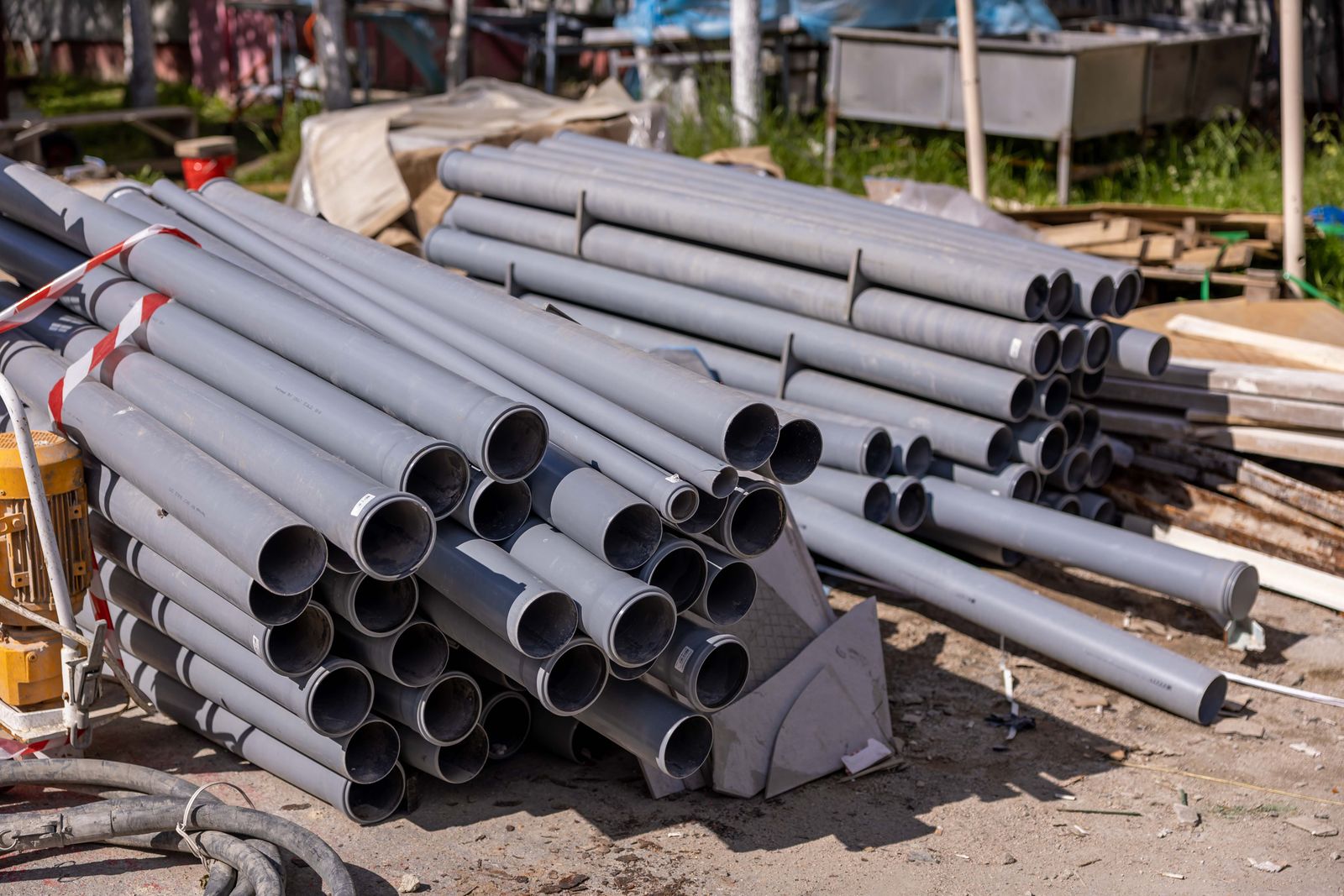
Why older sewer pipe fails
Sewer laterals installed decades ago were built from whatever was standard at the time. Clay pipe comes in short sections joined by mortar or rings, Orangeburg is a fiber and pitch pipe that was common for a stretch of mid-century building, and cast iron was often used near the house. Each of them has a known way of giving out.
Clay cracks and its joints open. Orangeburg softens, deforms and can collapse into an oval. Cast iron corrodes from the inside and flakes. None of this means the pipe fails on a schedule, but it explains why homes with older laterals see the same story: slow drains, repeat clogs, then a backup.
Signs you may need clay sewer pipe replacement in Asheboro
No one sign proves the pipe is finished, but a few together make a strong case for a camera check.
- A backup or slow drain that returns weeks or months after clearing
- Roots pulled out every time the line is cleaned
- Gurgling toilets and several fixtures draining slowly at once
- A wet or sunken patch in the yard along the path of the line
- A sewer smell outside near the lateral
The camera is what turns a guess into an answer. It shows the material, the joints and any offset, collapse or sag, and it is the same footage the pro uses to recommend a fix.

Orangeburg pipe replacement: what makes it different
Orangeburg is built from layers of wood fiber held together with pitch. It was a light, low-cost pipe, and it tends to age badly. Instead of cracking cleanly like clay, it can flatten, blister or peel in layers, and a cleaning cable can tear it.
That is why pros are careful when they find it. A line with soft or deformed Orangeburg is usually a candidate for replacement, because a repair or liner needs a solid host pipe to hold onto, and Orangeburg often cannot offer one. The camera shows whether yours is still round.
Not sure what is under your yard?
Tell the pro the age of the house and what the drains are doing.
Ask about a camera checkClay sewer pipe replacement or repair: how the options compare
Not every old pipe needs to come out. The right choice depends on what the camera shows and where the damage sits.
| Option | Fits when | Limits |
|---|---|---|
| Spot repair | One damaged section, the rest sound | Does not help if other joints are failing |
| Pipe lining | Cracked or leaky joints in a pipe that is still round | Needs a continuous host pipe |
| Pipe bursting | Pipe too damaged to line, with a clear path | Needs access pits at each end |
| Open trench replacement | Collapsed or badly offset pipe, or a changed route | Digs up yard, driveway or landscaping |
Our page on trenchless sewer repair explains lining and bursting in more detail, and a pro can say which one fits your line.
Old sewer pipe replacement is only one of the choices, and the table shows when a spot repair or lining fits instead.
What clay sewer pipe replacement in Asheboro involves
A replacement usually starts with the camera, then a locate of the line so the crew knows where it runs and how deep it sits. Next comes the plan, which may be trenchless or open trench, and an upfront price you hear before work starts.
The crew then replaces the old pipe with new pipe, connects it to the house and to the public side, and confirms the flow with a final camera pass or a water test. Whether a permit or inspection is required depends on the work and the local rules, and the pro can tell you what applies to your job. Ask for the before and after footage so you have it on file.
Add access while the line is open
An old lateral often has no cleanout, which means every future visit starts with pulling a toilet. A replacement is an easy time to fix that. Our page on sewer cleanout installation explains what a cleanout does and where it goes, and it is a sensible addition to a new line.
What affects the price of replacement
No honest number can be given without seeing the line. The main drivers are the length of the lateral, its depth, what sits above it, the method, and whether the crew has to restore a driveway, walk or landscaping. A trenchless job can cost less in restoration, and an open trench can cost less in equipment, so the lower-cost path is not always the obvious one.
The pro explains the plan and the price after the camera inspection and before any work begins, and you can ask what is included in the figure and what would change it.
Older pipe on Asheboro lots
Age is the biggest clue. Around the downtown core, houses from the 1920s to 1940s on small lots tend to have clay or cast iron laterals under mature trees, and sewer line repair in Downtown Asheboro covers that setting. The 1950s to 1970s ranch houses on the north and east side are more likely to have clay or Orangeburg, with roots at the joints.
For homes in sewer line repair in Hamlet Lakes or sewer line repair in Daves Mountain, the area pages describe how the pros there approach the line. A camera on your own pipe is still the way to know what you have, since material and age vary house by house.
Buying an older house with clay or Orangeburg pipe
If you are buying, the sewer line is one of the biggest unknowns in an older home. A camera scan before closing can show whether the lateral is original clay, Orangeburg or something newer, and what shape it is in. Our page on sewer scope before buying a house explains how that works and what to do with the results.