What trenchless sewer repair in Asheboro actually means
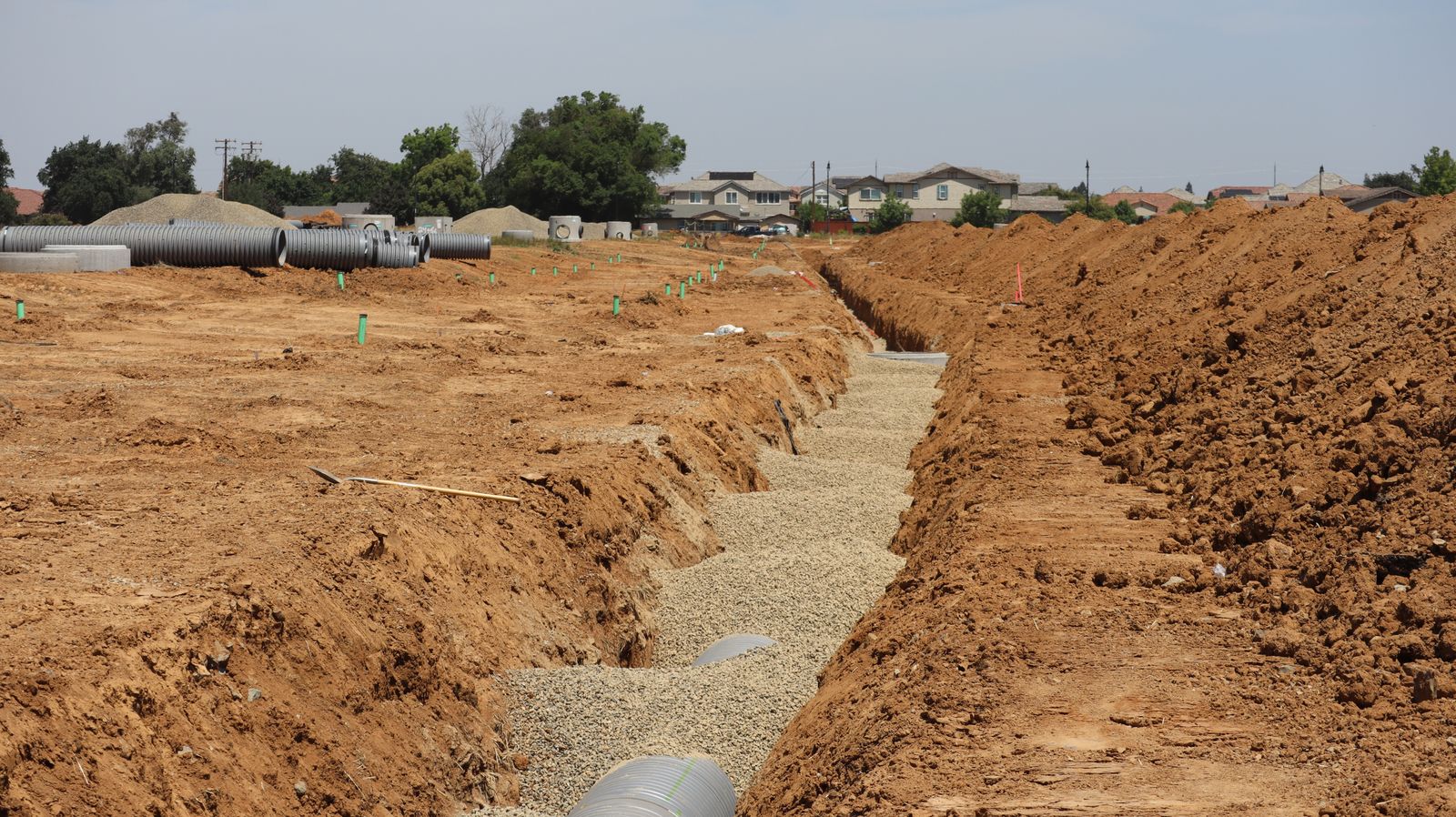
Your building sewer, also called the sewer lateral, is the pipe that carries waste from the house to the public main. Repairing it the traditional way means an open trench along the full length of the pipe. Trenchless methods work from the inside of the old pipe, or pull a new one through its path, so the digging is limited to a few access points.
Two methods cover most trenchless jobs: lining a pipe that is still mostly intact, and pipe bursting, which breaks the old pipe apart while a new one is pulled in behind it. Neither is a shortcut around inspection. Both depend on what a camera shows about the pipe, which is why the first step is always to look inside the line.
Trenchless is a tool, not a promise. Some Asheboro lines suit it very well and some do not, and an honest pro will tell you which you have before talking about price.
Wondering if your line is a fit?
Describe what you are seeing and the pro will tell you whether a camera first makes sense.
Book a camera inspectionSewer pipe lining or pipe bursting: how they differ
Lining, often called cured-in-place lining, pushes a resin-soaked liner into the old pipe and lets it harden against the inside wall. It works best when the pipe is continuous, round and cracked or leaking at joints. Pipe bursting pulls a new pipe, usually PVC or similar, through the old path while a bursting head fractures the old pipe outward. It suits lines that are too damaged to line but still follow a workable route.
| Method | What it does | Where it tends to fit | Where it struggles |
|---|---|---|---|
| Pipe lining | Creates a new inner pipe inside the old one | Cracks, leaking joints and root entry in a pipe that still holds its shape | Collapsed sections, deep sags, sharp offsets |
| Pipe bursting | Replaces the old pipe with a new one along the same path | Badly cracked or deteriorated clay and Orangeburg lines on a clear route | Crossings with other utilities, very tight bends |
| Open trench | Digs down to the pipe and replaces it section by section | Collapsed pipe, major sags, lines that need re-grading | Driveways, patios and mature trees above the line |
None of these is better in every case. The right choice depends on pipe material, condition, depth, route and what sits above the line, and the pro explains the trade-offs before work starts.
Pipe bursting sewer line work needs an access pit at each end of the run, so the lot, the route and the depth matter as much as the pipe itself.
When trenchless is a good fit, and when it is not
Trenchless tends to work well when the pipe is continuous, roots are entering at joints, and the cracks are not accompanied by collapse. It also helps when the line runs under something you would rather not dig up, such as a driveway or a mature tree. A new inner pipe or a replacement pulled through the same path can leave the surface largely as it was.
It tends to work poorly when part of the pipe has collapsed, when the line has a bad sag that holds water, when a joint is badly offset, or when bends are too tight for the equipment. In those cases an open trench, at least for the damaged section, is the honest answer. A pro who tells you trenchless works on every line is not looking at your pipe.
Cost and time are not decided by method alone. They depend on length, depth, access and conditions, so the upfront price for each option is explained on the phone before anyone digs.
No dig sewer repair still needs a few access points
People search for no dig sewer repair, but even the least invasive job needs somewhere to start. The access point is often an existing cleanout. When the line has none, a small pit is opened near the house, and sometimes a second pit near the street end so the equipment has a path through the pipe.
A pipe bursting job usually needs an entry pit and an exit pit, and a lining job may need only one. The pits are small compared with a full trench, but they are real holes in the yard, and the pro marks where they would go so you can see what is affected before you agree to anything.
If your home has no cleanout, adding one during the work is common. It gives the line a permanent access point, which makes later cameras and cleaning easier.
Driveways, mature trees and hardscape on Asheboro lots
Asheboro lots vary by neighborhood, and so does what sits on top of the sewer line. Around the downtown core, the 1920s to 1940s houses sit on small in-town lots with mature trees close to the pipe, and a lateral of that age is often vitrified clay or cast iron. That is a common place where trenchless is considered first, and our page on sewer line repair in Downtown Asheboro covers what the camera tends to find there.
On the north and east side, the 1950s to 1970s ranch houses on suburban lots may have clay or Orangeburg pipe, with roots at the joints and a driveway or patio above the line. See sewer line repair in Shamrock Hills for how that plays out on a typical lot there.
The hilly Piedmont ground adds its own twist. Red clay soil and rock can make an open trench slow going on sloping lots, which is one reason trenchless is worth a look. Homes on septic tanks, common on the outer edges, are outside this service.
What the camera has to show before anyone recommends lining
A recommendation to line or burst a pipe should rest on footage, not a guess. A sewer camera inspection shows whether the pipe is continuous, where the cracks and offsets are, how far a sag runs, and whether any section has collapsed. It also shows the pipe material, which matters for choosing a method.
If roots are the main problem, the camera shows where they enter, and the pro can say whether cutting them is enough or the pipe needs lining. Our page on tree roots in sewer line problems explains that split. If sewage is already coming up a drain, start with the sewer backup page, because the line usually needs to be cleared before it can be inspected.
Ask for the video, ask what it shows, and ask why the proposed method fits that pipe. A clear answer is a good sign.